FlightCore
FlightCore: Engineering the Safety Layer for Hybrid-Electric VTOL
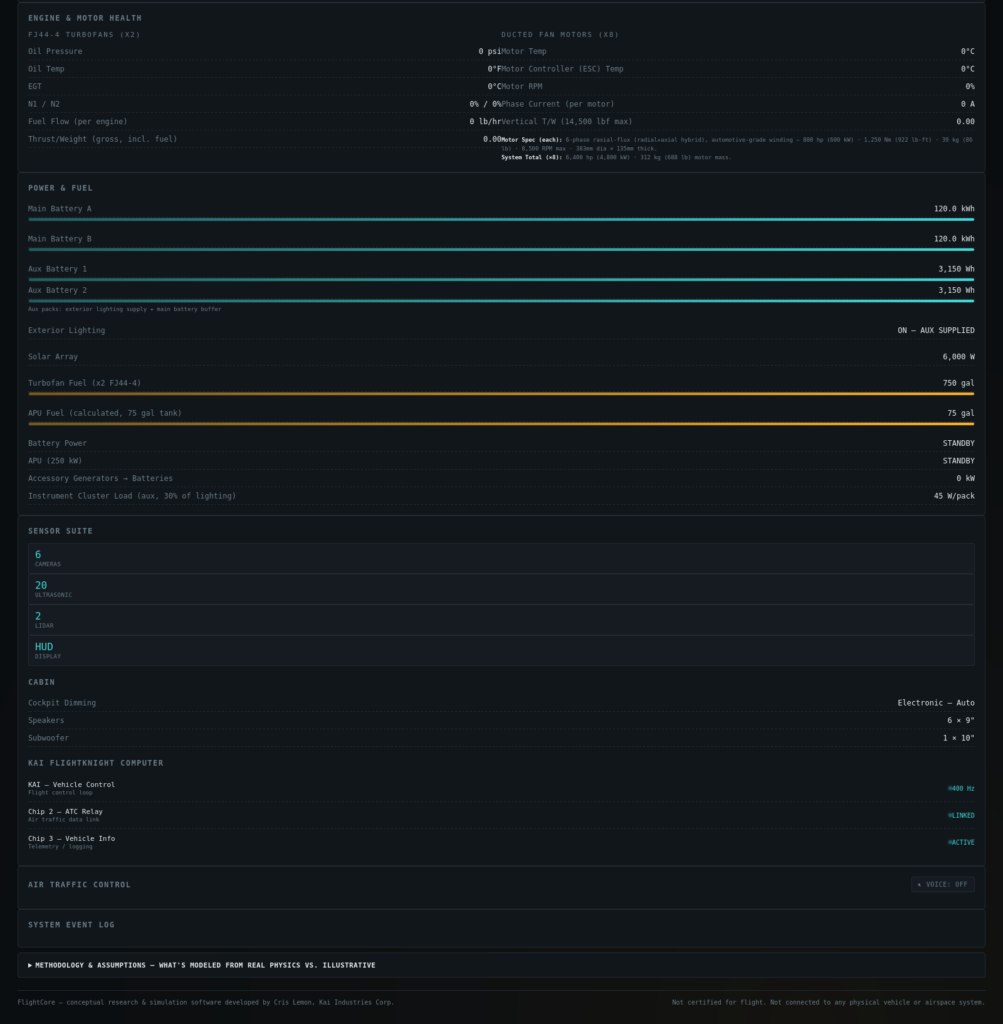
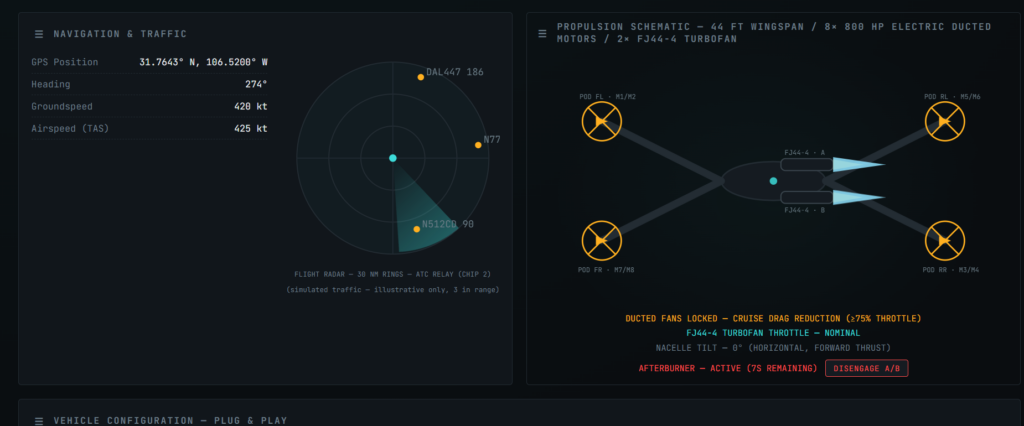
FlightCore is Kai Industries’ digital engineering software and platform originally built for the KAI X1, a hybrid-electric, twin-turbofan VTOL aircraft concept. Built by founder Cris Lemon, it doesn’t just visualize flight — it models the actual decision-making an autonomous hybrid-electric aircraft has to get right, grounded in real propulsion data rather than illustrative approximation: genuine turbofan performance figures, real Jet-A fuel density, and an altitude-corrected fuel-flow model calibrated against actual high-altitude cruise data.
Safety Built Into the Architecture, Not Bolted On
Hybrid-electric VTOL introduces a failure mode pure battery-electric and pure jet aircraft don’t share: the moment of transition between propulsion systems. FlightCore models this directly. When the aircraft’s Full Electric mode approaches its operational altitude ceiling, the system doesn’t wait until the electric ducted fans cut out — it pre-emptively ignites the turbofans and hands off propulsion before the transition point, closing the exact gap where a real aircraft could otherwise lose thrust entirely. The same discipline runs throughout: battery-powered lift is locked out below a 20% charge threshold and won’t re-engage until it recovers to 50%, preventing the kind of rapid on/off cycling that would stress real hardware. The autonomous flight system doesn’t just fly wherever it wants, either — every altitude change above what’s currently authorized requires the AI to request clearance from ATC and wait for approval, the same way a real IFR flight operates, with the aircraft holding its assigned altitude if that clearance is denied.
Sensor-Guided Landing, Not Just Airport-to-Airport
Most flight simulation tools assume you’re always landing somewhere with a runway. FlightCore explicitly handles the case where you’re not: landing at a private address or open field triggers a real sensor-assessment sequence — camera-based obstacle detection, LIDAR terrain and slope analysis, and ultrasonic zone-size confirmation — before the aircraft is cleared to touch down, with the vehicle holding in a stable hover until that assessment completes.
Built for the Complexity Real Missions Actually Have
A route that exceeds the aircraft’s range doesn’t just fail — FlightCore automatically searches its airport database and inserts the refueling stop that minimizes total added distance, not just the nearest option. The propulsion model itself is swappable: turbofan, turboshaft, or all-electric configurations each use their own physically correct fuel-burn formula, so the platform isn’t locked to one airframe’s assumptions. And underneath all of it sits a 20-plus-test automated regression suite that verifies the physics and safety logic stay correct through every change — the kind of engineering discipline that matters when the tool’s purpose is supporting real technical review, not just looking convincing.